
Quick Answer
- Fish bone broth is the lightest, quickest broth to make, ready in under an hour.
- It has a delicate, lightly briny flavor and provides collagen, protein, and minerals like iodine.
- Use heads and frames from non-oily white fish for the cleanest, mildest result.
- It shines as a base for seafood soups and lighter dishes, and sits at the delicate end of the types of bone broth.
Fish bone broth is the unsung member of the bone broth family: light, quick, and delicate, with its own distinct charm. While beef and chicken get most of the attention, fish broth has been a staple of coastal cooking for generations and offers a fresh, mineral-rich alternative. Here is what makes it special, what it may offer, and how to make and use it.
If you have ever enjoyed a good seafood soup or a delicate Asian fish broth, you already know what this broth can do. It is also the fastest bone broth to make by far, which is a real bonus.
What Makes Fish Broth Different
The biggest difference is speed and delicacy. Where a beef bone broth simmers for the better part of a day, a fish bone broth is ready in under an hour, since fish bones are small and give up their goodness quickly. The flavor is correspondingly lighter: clean, delicate, and gently briny rather than deep and hearty. This makes it the most subtle of the broths, well suited to dishes where you do not want to overpower other flavors. See our types of bone broth page for the full comparison.
Potential Benefits
Like other bone broths, fish broth provides collagen, protein, and minerals, and it has a few of its own characteristics. Fish bones and the broth made from them can be a source of iodine and other minerals from the sea. As with any broth, these are areas it may support as part of a balanced diet rather than treat, and results vary. For the wider picture on what broth offers, see our overview of bone broth benefits and does bone broth have collagen.
The Flavor and How to Use It
Fish broth’s light, briny character makes it a natural base for seafood soups, chowders, and delicate noodle bowls, and it pairs beautifully with ingredients like ginger, lemongrass, herbs, and citrus. It is more of a cooking broth than an everyday sipping broth for most people, though a well-seasoned cup can be lovely. Because it is so delicate, it lets other flavors shine, which is exactly what you want in a refined seafood dish. Our easy bone broth soup ideas and how to use bone broth have plenty of inspiration.
Choosing Your Fish
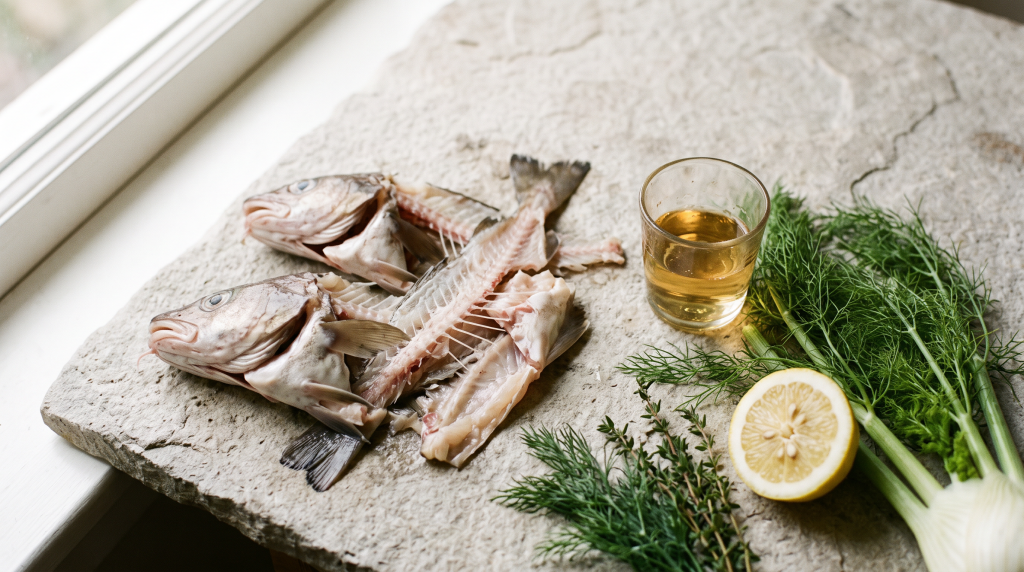
The key to a clean, pleasant fish broth is choosing the right fish. Use heads and frames from non-oily, white fish such as snapper, cod, halibut, or sole, which give a mild, clean result. Avoid oily fish like salmon, mackerel, and sardines for broth, since they turn strong and can taste overpowering or fishy. Ask your fishmonger for white fish bones and heads, which are often inexpensive or even free, much like the best bones for other broths.
How to Make It
- Rinse the fish heads and frames well, and remove the gills, which can add bitterness.
- Add them to a pot with aromatics like onion, fennel, celery, and a splash of white wine or vinegar.
- Cover with water, bring to a gentle simmer, and skim any foam that rises.
- Simmer gently for only 30 to 45 minutes; unlike other broths, fish broth turns bitter if cooked too long.
- Strain it well through a fine sieve, then cool and store it.
That short cook time is the golden rule. Fish broth is the one broth where longer is not better, so resist the urge to simmer it for hours.
Storing Fish Broth
Fish broth is best used fresh, since its delicate flavor does not keep quite as long as heartier broths. Refrigerate it and use it within a couple of days, or freeze it in portions for longer storage; it freezes well and is handy to have ready for a quick seafood soup. Our guides to how to store bone broth and can you freeze bone broth cover safe storage, and how long bone broth lasts has the timelines.
A Lighter Broth Worth Trying
Fish bone broth will not replace a hearty beef or comforting chicken broth, but it is a wonderful, quick, delicate option that brings variety to your kitchen. Its speed makes it ideal for a spontaneous seafood soup, and its clean flavor suits lighter cooking beautifully. If you enjoy seafood, it is well worth trying, and it rounds out the bone broth family nicely alongside a chicken bone broth, a beef bone broth, and the others. Browse them all on our types of bone broth page.
Where Fish Broth Shines
Fish broth’s light, clean, gently briny character makes it a natural choice for delicate dishes. It is the classic base for seafood soups and chowders, for Asian-style fish and noodle bowls, and for poaching seafood or cooking rice that will accompany fish. Anywhere you want a subtle, oceanic backbone that supports rather than overwhelms other flavors, fish broth delivers. It pairs beautifully with ginger, lemongrass, fennel, herbs, and citrus, which complement its freshness. For more inspiration, see our easy bone broth soup ideas.
How It Compares to Other Broths
Among the broths, fish sits firmly at the delicate, light end of the spectrum. A beef bone broth is deep and hearty, a chicken bone broth is mild and comforting, and fish is lighter and brinier than either, with the bonus of cooking in well under an hour. That speed and subtlety make it a different tool rather than a competitor, ideal for lighter, seafood-focused cooking. Rotating fish broth in alongside the heartier options adds welcome variety; our types of bone broth page compares them all side by side.
Tips for the Cleanest Result
A few simple habits give the cleanest, most pleasant fish broth. Rinse the heads and frames well and remove the gills, which can add bitterness. Use non-oily white fish and avoid oily species that turn strong. Keep the simmer gentle and brief, just 30 to 45 minutes, since longer cooking turns fish broth bitter. And strain it well through a fine sieve for a smooth result. Use it fresh or freeze it promptly, since its delicate flavor does not keep as long as heartier broths; see can you freeze bone broth.
Is Fish Broth Worth Making?
For anyone who enjoys seafood, fish bone broth is well worth a try. Its biggest practical advantage is speed: while heartier broths simmer for many hours, fish broth is ready in well under an hour, which makes it perfect for a spontaneous seafood soup or a quick, delicate base on a weeknight. Its clean, gently briny flavor suits lighter cooking beautifully and lets other ingredients shine.
It will not replace the comforting richness of a chicken bone broth or the hearty depth of a beef bone broth, but it is not meant to. Think of it as a distinct, lighter tool that rounds out your repertoire, ideal for the dishes where a heavy broth would overwhelm. Use non-oily white fish, keep the simmer short so it does not turn bitter, and use or freeze it promptly since its delicate flavor does not keep as long. Browse the full lineup on our types of bone broth page to see where fish broth fits in.
A Light Broth Worth Keeping Around
To sum up, fish bone broth is the quick, delicate member of the broth family, ready in under an hour and perfect for seafood soups and lighter dishes where a heavy broth would overwhelm. Use non-oily white fish, keep the simmer short so it stays clean rather than bitter, and use or freeze it promptly since its delicate flavor does not keep as long as a hearty beef bone broth or comforting chicken bone broth. It will not replace those richer broths, but it adds welcome variety, and if you enjoy seafood it is well worth keeping in your repertoire. See where it fits on our types of bone broth page.
Frequently Asked Questions
Is fish bone broth good for you?
Like other bone broths, it provides collagen, protein, and minerals, including iodine from the sea, in a light, low-calorie form. It may support a balanced diet as part of a routine, and results vary.
What fish is best for bone broth?
Use heads and frames from non-oily, white fish like snapper, cod, halibut, or sole for a clean, mild broth. Avoid oily fish such as salmon and mackerel, which turn strong and overpowering.
How long do you cook fish bone broth?
Only 30 to 45 minutes. Unlike heartier broths, fish broth turns bitter if simmered too long, so a short, gentle cook is the rule.
What does fish bone broth taste like?
It is light, clean, and gently briny, the most delicate of the broths. That subtle flavor makes it a great base for seafood soups and dishes where you do not want to overpower other ingredients.
Can you sip fish bone broth like other broths?
You can, and a well-seasoned cup can be lovely, but for most people fish broth is more of a cooking base than an everyday sipping broth because of its delicate, briny character.
