
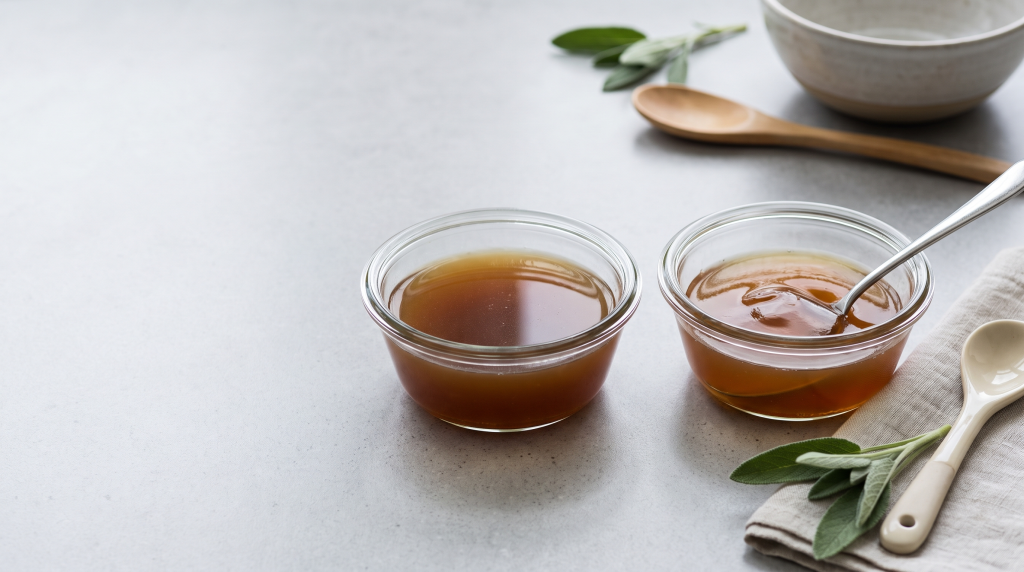
| Quick Answer Yes. Simmering bones and connective tissue releases collagen, which dissolves into the broth as gelatin. The amount varies with the bones and the simmer time; a broth that gels firmly when chilled is the most collagen rich. Your body breaks collagen into amino acids before using it, so benefits build gradually and results vary. A beef bone broth is often richer in body than a lighter chicken bone broth. |
Yes, bone broth contains collagen, and that collagen is the single biggest reason it has become such a popular wellness drink. When you simmer bones and connective tissue for hours, their collagen breaks down into gelatin and dissolves into the liquid. That is what gives a good bone broth its silky body and its signature wobble when chilled.
But there is more to the story than a simple yes. How much collagen a broth holds, what your body actually does with it, and how it compares with a collagen supplement are all worth understanding before you decide how bone broth fits your routine. Let me walk through each.
Where the Collagen Comes From
Collagen is the main structural protein in bones, skin, tendons, and cartilage. During a long, gentle simmer, heat and water slowly convert that collagen into gelatin, which is simply collagen broken down into a form that dissolves in liquid. The more collagen rich the bones, the more gelatin ends up in your cup.
This is why joint heavy cuts, knuckles, and feet make the richest broth, and why a beef bone broth often feels more substantial than a lighter chicken bone broth. For a side by side look at how the animals differ in body and flavor, see our guide to the types of bone broth, and for what to buy, our piece on the best bones for bone broth.
How Much Collagen Is in Bone Broth?
There is no single number, because it depends on the bones, the ratio of bones to water, and how long the broth simmers. A rich, long cooked broth that sets firmly into a gel when cold contains more collagen than a thin one that stays liquid. The gel test is the easiest at home indicator: the firmer the wobble, the more collagen you have.3
This variability is also why store bought broths differ so much. Some are concentrated and gel beautifully, while others are thinner. The protein number on the label is a useful clue, since most of the protein in bone broth is collagen. For the broader nutrition picture, our bone broth nutrition facts breaks down what a typical cup provides.
What Your Body Does With It
Here is the part worth being clear about. When you drink collagen, your body does not send it straight to your skin or joints. It breaks the collagen down into amino acids, such as glycine and proline, and uses them as building blocks wherever they are needed. Research on dietary collagen suggests it may support skin elasticity and joint comfort over time, though effects build gradually and results vary from person to person.
So bone broth is a genuine source of collagen, but it is best thought of as a steady, supportive habit rather than a quick fix. It is also worth being honest that much of the strongest research studies concentrated collagen peptides rather than broth specifically, and some of it is industry funded, which is a reason to keep expectations measured. You can read more about the wider evidence in is bone broth good for you and our overview of bone broth benefits.
Glycine, Proline, and the Other Amino Acids
Collagen is unusually rich in a few specific amino acids, especially glycine and proline, which is part of what makes bone broth distinctive. Glycine has been studied for possible roles in restful sleep and the gut, while proline is involved in the body’s own collagen formation. Bone broth also tends to carry glutamine, an amino acid often discussed in the context of the gut lining. These compounds are behind most of the benefits people associate with broth, though, as always, they may support these areas rather than treat them.
Bone Broth vs. Collagen Supplements
Both deliver collagen, but in different ways. A collagen supplement is concentrated and consistent, giving you a known dose per scoop with little flavor. Bone broth gives you collagen alongside other amino acids, minerals, and the comfort of a warm, savory cup, but the amount varies more from batch to batch.
Neither is simply better; it depends on what you want. If a measured collagen dose is the goal, a supplement or a bone broth protein is efficient. If you want the ritual, the hydration, and the broader nourishment, liquid broth delivers. The different forms of bone broth let you pick whichever fits your day, and many people use both.
Getting the Most Collagen From Your Broth
- Choose a broth that gels when chilled, or make your own with plenty of joints, knuckles, and feet.
- Favor rich, long simmered broths over thin, quick ones.
- Sip it consistently, since collagen related benefits build over weeks, not days.
- Pair it with a varied, protein rich diet and adequate vitamin C, so your body has what it needs to put those amino acids to work.
The Bottom Line on Collagen
Bone broth genuinely contains collagen, and a rich, gelling broth is one of the more pleasant ways to include it in your diet. Just keep the framing right: it is a nourishing food that may support skin, joints, and gut comfort as part of a consistent routine, not a guaranteed treatment. Drink it because you enjoy it and it makes you feel good, and let any longer term benefits be a welcome bonus. For ideas on working it into your week, see how to use bone broth.
Collagen and Skin: What Research Suggests
The most studied use of dietary collagen is for skin. Research on collagen peptides suggests they may support skin elasticity and hydration over time, and since bone broth is a natural source of collagen, it is often included in the same conversation. The important caveats are that much of this research uses concentrated supplements rather than broth, that effects build gradually over weeks, and that results vary from person to person. So bone broth may support skin as part of a consistent routine, but it is not a guaranteed or overnight fix.1
Collagen and Joints
Collagen is a major component of cartilage, which is why it comes up so often in discussions of joint comfort. Some studies on collagen supplements report benefits for joint comfort in active people, and the collagen and amino acids in bone broth are the same kinds of building blocks. As with skin, the evidence is encouraging rather than conclusive, and bone broth is best seen as a supportive habit rather than a treatment. Anyone with a specific joint concern should speak with a qualified professional.2
Does Heat Destroy the Collagen?
A common worry is that the long simmer destroys the collagen, but the opposite is true. Gentle, prolonged heat is exactly what converts the tough collagen in bones and connective tissue into soluble gelatin, which is what you want. The key is a low, steady simmer rather than a rolling boil; too hard a boil can make the broth cloudy, but it does not eliminate the collagen. The gel that forms when the broth cools is your proof that the collagen made it into the cup intact.
How to Add More Collagen to Your Day
If collagen is your reason for drinking bone broth, there are simple ways to get more of it consistently. Choose or make a broth that gels firmly when chilled, since that gel is your visible proof of a collagen rich cup. Sip it most days rather than occasionally, because the benefits people associate with collagen build gradually over weeks. And lean on the richest options, like a long simmered beef bone broth or a chicken broth made with plenty of feet.
Bone broth does not have to be your only source, either. A concentrated bone broth protein powder delivers a measured amount of collagen with little effort, and the different forms of bone broth let you match convenience to your routine. Pairing your collagen intake with a varied, protein rich diet and enough vitamin C gives your body the building blocks it needs to put those amino acids to work. As always, results vary from person to person, so treat collagen as a steady, supportive habit rather than a quick fix, and let any longer term benefits be a welcome bonus.
Frequently Asked Questions
Does all bone broth have collagen?
Any true bone broth contains some collagen, but the amount varies. A rich broth that gels when chilled has more than a thin one that stays liquid.
Is the collagen in bone broth as good as a supplement?
Both provide collagen. A supplement gives a measured, consistent dose, while bone broth provides collagen plus other amino acids and minerals in a warm, savory cup. The best choice depends on your goal.
Does cooking destroy the collagen in bone broth?
No. The long simmer is what converts collagen into gelatin and releases it into the liquid. That gelatin is the collagen, now in a dissolved, drinkable form.
How much bone broth should I drink for collagen?
There is no official amount, but a cup most days is a reasonable habit. Collagen related benefits tend to build with consistency over time rather than from a single serving.
Does chicken or beef bone broth have more collagen?
It depends on the bones used more than the animal, but both can be very collagen rich. Broths made with plenty of feet, knuckles, and joints gel the most, whether chicken or beef.
Is bone broth a complete protein?
Not quite. The protein in bone broth is largely collagen, which is lower in some essential amino acids than complete proteins like meat or eggs. It is a useful complement to a varied diet rather than a sole protein source.
| How We Reviewed This Article. Written by Dr. Kellyann Petrucci, MS, ND, and checked against independent research by the bonebroth.com editorial team. It uses careful language for claims that are still being studied, flags any industry funded research, and is updated as new evidence emerges. |
Sources
The claims above draw on independent, peer-reviewed research:
