
Quick Answer
- Pork bone broth is rich, silky, and slightly sweet, thanks to collagen heavy trotters and neck bones.
- Like other broths, it is a source of collagen and amino acids that may support skin and joints. Results vary.
- It makes an excellent base for hearty soups and noodle bowls, and sips well seasoned simply.
- It is less common in stores, so making your own, or choosing another ready made broth, are both easy options.
Pork bone broth is one of the most underrated members of the bone broth family. Rich, silky, and slightly sweet, it has been the backbone of beloved dishes around the world for generations. Here is what makes pork broth special, what it may offer, and how to enjoy it, whether you simmer your own or buy it ready made.
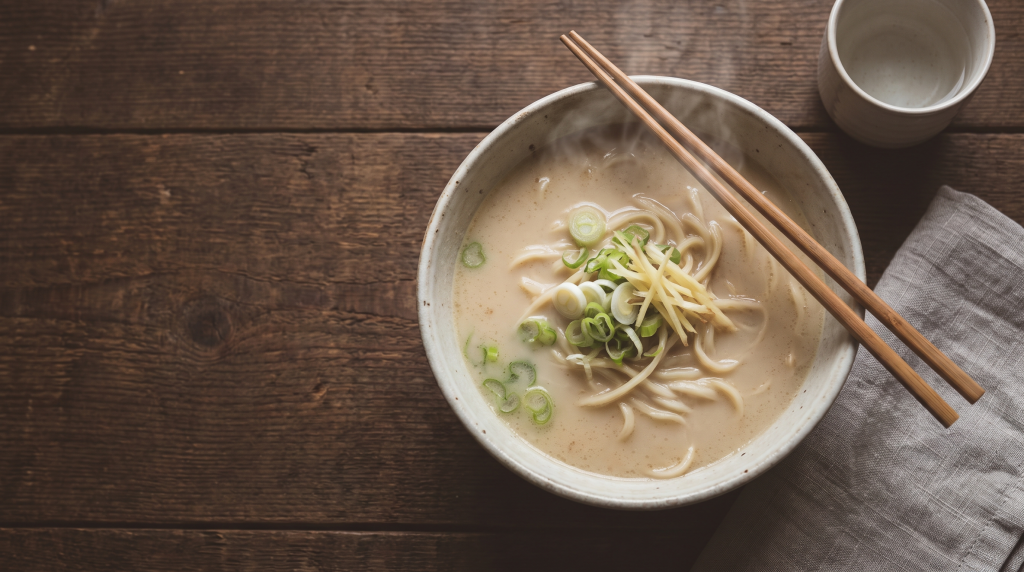
If you have ever had a creamy bowl of tonkotsu ramen, you have already tasted what long simmered pork bones can do. That same richness translates beautifully into a sipping broth or a soup base.
What Sets Pork Broth Apart
Pork bones, especially trotters and neck bones, are loaded with collagen, which gives pork bone broth a notably silky, full bodied texture and a firm gel when chilled. The flavor is rich and rounded, with a gentle sweetness that sets it apart from the deep savoriness of a beef bone broth or the light comfort of a chicken bone broth. For a fuller comparison across animals, see our overview of the types of bone broth, and for how it comes across in the cup, our guide to what bone broth tastes like.
Potential Benefits
Like other bone broths, pork broth is a source of collagen and the amino acids glycine and proline, which research suggests may support skin and joints as part of a consistent routine. It also provides protein and small amounts of minerals in a warm, low calorie cup. As always, these are areas bone broth may support rather than treat, and results vary from person to person.
The silky body of a collagen rich pork broth is also simply satisfying, which is part of its appeal as a warming, nourishing drink. You can read more about the collagen connection in does bone broth have collagen and the wider picture in our overview of bone broth benefits.
The Flavor and How to Use It
Pork broth’s richness makes it a wonderful base for hearty soups and noodle bowls, and it is satisfying enough to sip on its own when seasoned simply with salt and white pepper. It pairs especially well with ginger, garlic, scallions, and a touch of soy or miso, flavors that complement its natural sweetness. Because it is so full bodied, a little goes a long way. For more serving ideas, see how to use bone broth and our easy bone broth soup ideas.
Pork Broth Around the World
Pork bone broth has deep culinary roots, especially across Asia. The famous tonkotsu ramen broth is made by boiling pork bones hard for many hours until the collagen and fat emulsify into a creamy, opaque liquid. Filipino, Korean, and Chinese cuisines all feature long simmered pork bone soups prized for their richness and comfort. That heritage is a reminder that bone broth is not a modern invention but a traditional food enjoyed for generations, now finding a fresh audience.
Making Pork Bone Broth
Pork broth follows the same approach as any bone broth: simmer collagen rich bones low and slow with aromatics and a splash of vinegar. Trotters and neck bones give the best gel and the silkiest result. Blanching the bones in boiling water first, then draining and rinsing them, helps produce a cleaner, clearer broth. Our beginner’s guide to homemade bone broth walks through the full process, the slow cooker method makes it hands off, and the best bones for bone broth covers exactly what to choose.
Buying It Ready Made
Pork bone broth is less common on store shelves than chicken or beef, so making your own is often the easiest way to enjoy it. That said, if you would rather not simmer, the convenient forms of bone broth, including powders and bone broth protein made from other animals, let you get a collagen rich cup with no prep. Whatever you choose, our guide to how long bone broth lasts will help you store it well so a rich pork broth is always ready when you want it.
Pork Broth and Gut Comfort
Like other bone broths, pork broth provides gelatin and the amino acid glutamine, which are often discussed in the context of the gut lining, and many people simply find a warm, easy to digest broth soothing. These are areas it may support as part of a consistent routine rather than treat, and results vary from person to person. If you have a specific digestive concern, it is worth speaking with a qualified professional rather than relying on broth alone.
Pork vs. Beef vs. Chicken Broth
Each animal brings something different. A beef bone broth is deep and hearty, a chicken bone broth is light and comforting, and pork sits between them with a rich, silky, slightly sweet character. Pork’s high collagen content from trotters and neck bones gives it an especially luxurious body. Trying each is the best way to find your favorite, and our types of bone broth overview compares them side by side.
Seasoning Pork Broth
Pork broth’s gentle sweetness pairs beautifully with savory, aromatic seasonings. White pepper, ginger, garlic, scallion, and a little soy or miso all complement it, as do star anise and a touch of chili for a warming bowl. Season at the end, tasting as you go, and brighten it with a squeeze of acid if it feels heavy. These touches turn a simple pork broth into a deeply satisfying cup or noodle base.
Storing and Freezing Pork Broth
A rich pork broth keeps in the fridge for about four to five days and freezes for several months. Because it is so collagen rich, it sets into a firm gel when chilled, which is normal and melts on reheating. Portion it before freezing so you only thaw what you need. Our guide to how long bone broth lasts has the full timelines and the signs that a batch has turned.
Dishes Where Pork Broth Shines
Pork broth’s rich, silky body makes it a star in a whole world of dishes. It is the soul of ramen, where long boiled pork bones create the creamy, deeply savory base, and it shines in noodle soups and dumpling soups across many cuisines. It also makes a wonderful foundation for hearty vegetable and bean soups, lending them a roundness that lighter broths cannot match. Anywhere you want a soup or braise to feel especially satisfying, pork broth delivers.
It is just as good in simpler settings. Cook noodles or greens directly in warm pork broth, ladle it over rice, or sip it on its own with a little white pepper and scallion. Its natural sweetness pairs beautifully with ginger, garlic, and a touch of soy or miso. For more serving ideas across all the broths, see our easy bone broth soup ideas and how to use bone broth. However you use it, pork broth rewards you with a depth of flavor that belies how simple it is to make from a few humble pork bone broth cuts.
Is Pork Broth Worth Trying?
If you have only had chicken or beef broth, pork is well worth seeking out. Its silky body and gentle sweetness make it one of the most satisfying broths to sip and one of the best bases for a rich, comforting bowl. Because it is less common on store shelves, making your own from collagen heavy trotters and neck bones is often the easiest route, and it rewards the effort handsomely. For a change of pace from the more familiar broths, or simply for the pleasure of that luxurious texture, a pot of pork bone broth is a delicious place to start. Compare it with the others on our types of bone broth page.
Frequently Asked Questions
Is pork bone broth healthy?
Like other bone broths, pork broth is a low calorie source of collagen, protein, and amino acids that may support skin and joints as part of a regular routine. Results vary from person to person.
What does pork bone broth taste like?
It is rich, silky, and slightly sweet, more rounded than beef and deeper than chicken. It is the broth behind creamy dishes like tonkotsu ramen.
What pork bones are best for broth?
Trotters and neck bones are ideal, since they are rich in collagen and give the broth a silky body and a firm gel when chilled.
Can I use pork bone broth like other broths?
Yes. It works as a sipping broth and as a base for soups and noodle bowls, and pairs especially well with ginger, garlic, and miso.
Why should I blanch pork bones first?
A quick blanch in boiling water, then a rinse, removes impurities and gives a cleaner, clearer broth. It is a small step that noticeably improves the result.
Can I drink pork bone broth on a diet?
Yes. Like other broths it is low in calories yet satisfying, which is why broth features in many eating plans. Choose a plain, well sourced broth and watch the sodium if you sip it often.
