The Bare Bones on Fish Broth The quick answer
Fish bone broth is the lightest and quickest of all, delicate and mineral-rich, and ready in under an hour. Use lean white fish frames rather than oily fish, and it becomes a clean, savory base for seafood soups and lighter dishes.
- The quickest broth to make, done in 45 minutes to an hour.
- Light and delicate, with a clean, savory flavor.
- Mineral-rich, and a source of collagen and protein like other broths.
- Best made from lean white fish frames, not oily fish.
- A clean base for seafood soups and lighter cooking.
Fish bone broth, sometimes called fish stock, is the outlier of the bunch. It is the lightest, the quickest, and the most delicate, and it rewards a gentle hand rather than a marathon simmer. Here is what it offers, the best fish to use, and how to make a clean, savory pot in under an hour.
Why Fish Bone Broth Is Different
Fish bones are delicate and give up their flavor and collagen fast, which is why fish broth is done in a fraction of the time of beef or chicken. That speed is its charm, but it also means more time is not better: a long simmer turns fish broth cloudy and bitter. The result, when made well, is a light, clean, mineral-rich liquid.
Fish Bone Broth Benefits and Nutrition
Fish broth delivers the same basic package as other bone broths, collagen, a little protein, and minerals, in an especially light, hydrating form. Because it carries minerals and electrolytes drawn from the bones, dietitians point to broths generally as a useful tool for hydration.
“I will recommend broths for people who are experiencing electrolyte imbalances.”
L.J. Amaral, clinical dietitian, Cedars-Sinai
As with every type, the exact amounts vary with the fish and the cook, and an independent analysis is a reminder to treat it as nourishing food rather than a measured supplement. For the full benefits picture shared across all bone broths, see bone broth benefits.
Which Fish to Use
Use the frames, heads, and bones of lean white fish such as snapper, cod, or halibut. Avoid oily fish like salmon, which can turn the broth strong and bitter. A quick rinse of the bones keeps the flavor clean, and very fresh bones are the difference between a broth that smells savory and one that smells fishy.
How to Make Fish Bone Broth
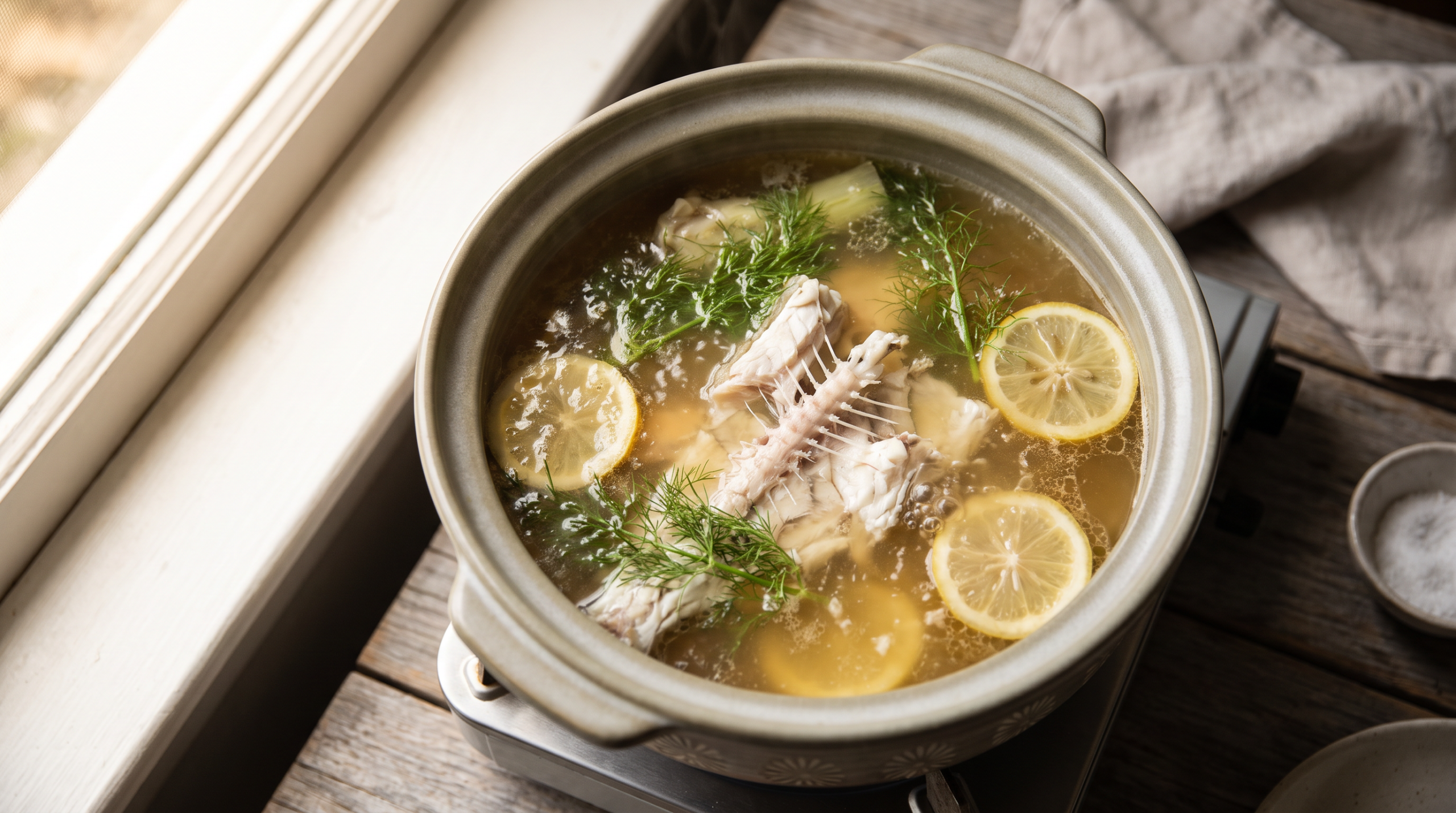
Cover the rinsed fish frames with cold water, add aromatics like onion, fennel, and a strip of lemon peel, and bring to the gentlest simmer. Here, watch the clock: forty-five minutes to an hour draws out plenty of body and a delicate flavor, and a longer cook can turn it cloudy. Strain it well and use it within a few days, or freeze it. For storage tips, see how to use bone broth.
A Note on Safety
Fish bone broth is a safe everyday food for most people. Use very fresh bones, watch the sodium in store-bought versions, and if you are pregnant, nursing, feeding a baby, or managing a health condition, check with a professional first. This page is information, not medical advice.
Frequently Asked Questions
How long do you simmer fish bone broth?
Only forty-five minutes to an hour. Fish bones are delicate and give up their flavor quickly, and a longer simmer can turn the broth bitter rather than better.
Which fish is best for broth?
Lean white fish such as cod, snapper, or halibut give the cleanest flavor. Avoid oily fish like salmon, which can make the broth taste strong.
Does fish bone broth smell fishy?
A fresh, well-made batch smells clean and savory. Using very fresh bones, rinsing them first, and avoiding oily fish are the keys to a delicate result.
Does fish bone broth gel?
It can, though it is lighter than beef. A good fish broth sets to a soft gel, a sign of the collagen drawn from the bones.
Is fish bone broth healthy?
Yes, as a light, hydrating, low-calorie source of protein and minerals. Like all bone broth, it supports a balanced diet rather than replacing one.
Sources & References
Independent, third-party sources. No brand-funded or competitor-commissioned studies are cited as evidence; where cited research was industry-funded, that is noted in the text.
[1] Rahimi N, Launico MV. “Biochemistry, Collagen Synthesis.” StatPearls, NCBI Bookshelf, U.S. National Institutes of Health. www.ncbi.nlm.nih.gov/books/NBK507709/
[2] “Bone Broth: Is It Good for You?” (L.J. Amaral, RD). Cedars-Sinai. www.cedars-sinai.org/stories-and-insights/expert-advice/bone-broth
[3] Alcock RD, Shaw GC, Burke LM. “Bone Broth Unlikely to Provide Reliable Concentrations of Collagen Precursors.” Int. J. Sport Nutrition & Exercise Metabolism, 2019. doi.org/10.1123/ijsnem.2018-0139
[4] “Bone Broth: Benefits, How To Make and Nutrition.” Cleveland Clinic. health.clevelandclinic.org/bone-broth-benefits